
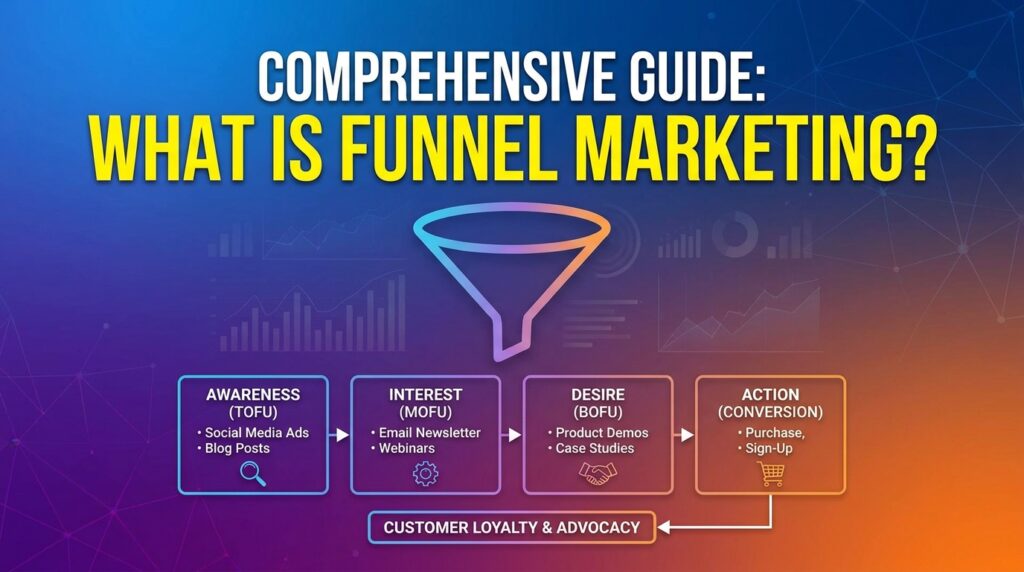
Comprehensive Guide: What is funnel marketing with example
In the competitive digital landscape, understanding how a prospect transitions from a stranger to a loyal customer is crucial for business growth. Many beginners and seasoned entrepreneurs constantly ask, what is funnel marketing with example? This comprehensive blog post is designed to answer that precise question, breaking down the mechanics of customer acquisition, engagement, and conversion. By exploring these core concepts and thoroughly explaining what is funnel marketing with example, we will provide you with a clear roadmap for scaling your business effectively.
Table of Contents
Understanding the Core Basics: What is funnel marketing with example
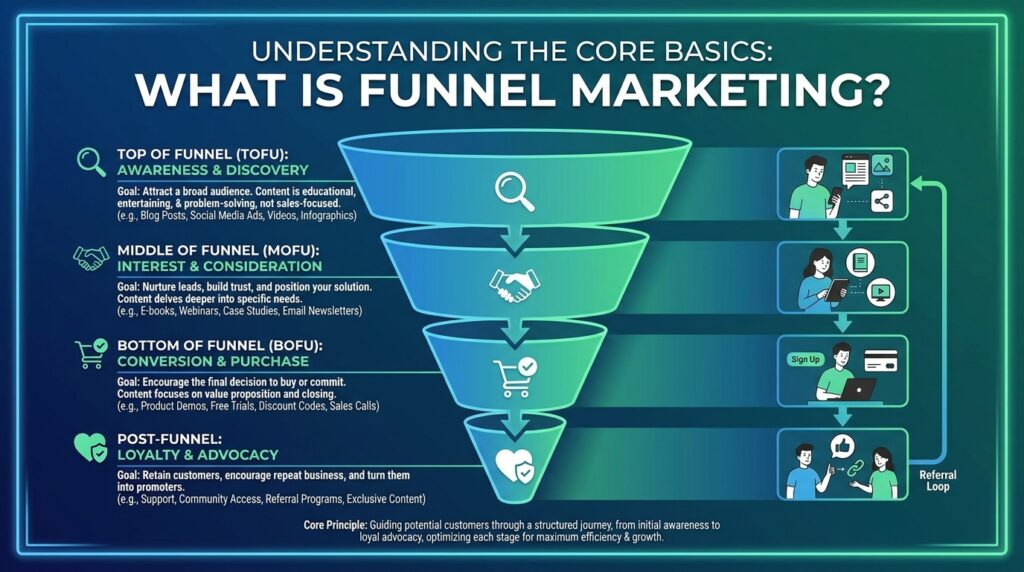
To fully grasp the concept of moving prospects through a purchasing journey, we must address the foundational inquiry. At its core, it is a strategic framework that visualizes the customer journey from initial brand awareness down to the final purchase decision. Imagine a physical object used in your kitchen; it is wide at the top and narrows at the bottom. In business, you cast a wide net to capture leads at the top, and as they move downward, unqualified leads drop off. Whenever someone asks me to explain what is funnel marketing with example, I emphasize that it is not just a trendy marketing buzzword, but a vital sales ecosystem.
The Stages of the Journey: Breaking Down What is funnel marketing with example
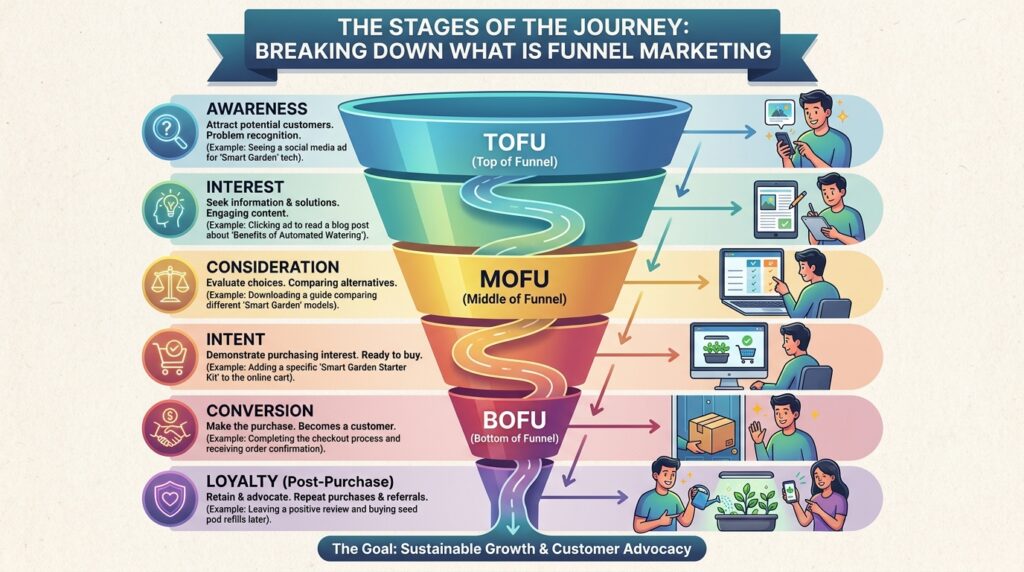
To truly master the mechanics behind the popular query, what is funnel marketing with example, you need to understand the distinct stages of this operational framework. The journey is divided into three primary sections: Top of the Funnel (TOFU), Middle of the Funnel (MOFU), and Bottom of the Funnel (BOFU).
Top of the Funnel (TOFU) - Brand Awareness
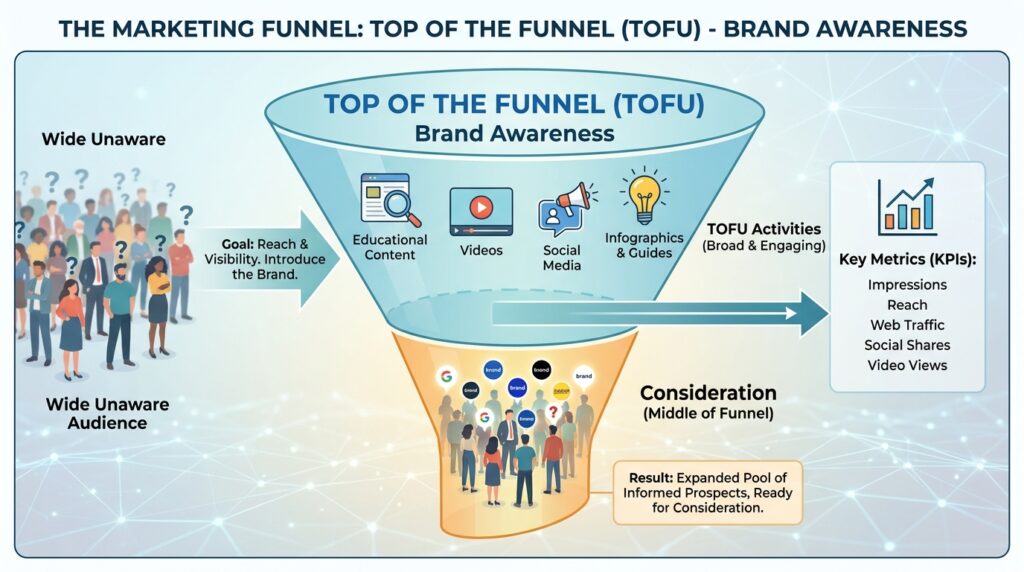
At this early stage, your target audience is experiencing a specific problem, but they may not know who you are or how you can help. If you want to accurately demonstrate exactly what is funnel marketing with example, you start right here. You create educational content, blog posts, and videos to attract a broad audience. The goal is to build brand awareness.
Middle of the Funnel (MOFU) - Consideration Phase
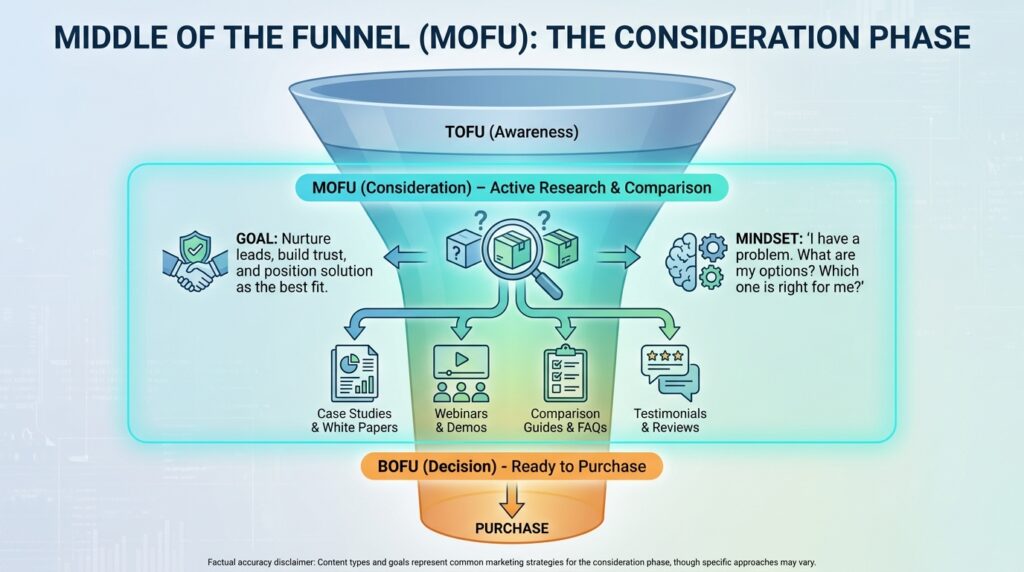
Once people know your brand exists, they move into the consideration phase. Here, they are actively researching solutions and comparing options. When closely looking at what is funnel marketing with example, this middle phase is where you offer valuable lead magnets like eBooks or guides in exchange for their contact information. You nurture these leads through targeted email marketing campaigns.
Bottom of the Funnel (BOFU) - Final Conversion
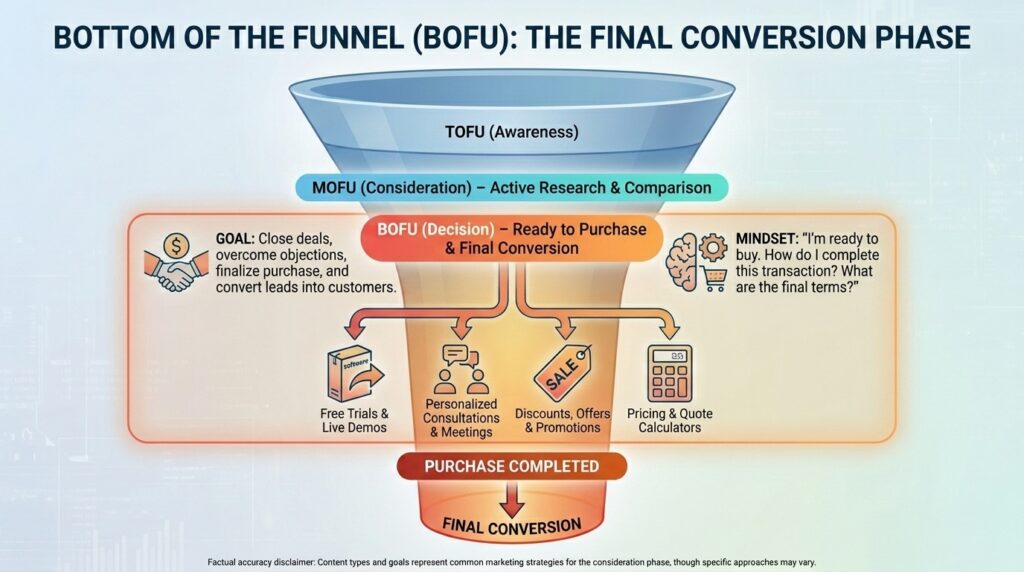
The bottom stage is where the magic happens and revenue is generated. The prospects here are highly qualified and ready to make a purchasing decision. To fully illustrate what is funnel marketing with example, the BOFU stage involves presenting compelling offers, free trials, and targeted sales pitches.
A Real-World Scenario: What is funnel marketing with example

Theoretical knowledge is great, but applying it makes the concept stick. Let us look at a practical scenario to clearly answer the critical question: what is funnel marketing with example?
Imagine you own a software company selling a premium project management tool.
Awareness: You run a targeted Facebook ad promoting a free blog post titled “10 Ways to Improve Team Productivity.” A manager struggling with efficiency clicks and reads your article. This perfectly illustrates the initial phase of what is funnel marketing with example.
Consideration: At the end of the post, you offer a free, downloadable guide to remote team management in exchange for their email address. The manager downloads it and enters your email sequence. This specific lead capture is a crucial element when studying what is funnel marketing with example. You send them case studies showing how your software helps similar companies save time.
Conversion: In your final email, you offer a 14-day free trial of your software along with a 20% discount on the annual plan. The manager signs up, loves the platform, and becomes a paying customer. This seamless transition from an ad to a paying subscriber is the quintessential answer to what is funnel marketing with example.
Why Your Business Absolutely Needs It Today
Now that we have established a baseline understanding, you might wonder why it is so critical for modern success. Simply answering what is funnel marketing with example is only half the battle; implementing it is where real value lies. Without a structured journey, your marketing efforts are flying blind. You might be spending thousands on advertising, but without a system to capture and convert traffic, you leave money on the table. When analyzing what is funnel marketing with example, it becomes evident that a structured system allows you to predict revenue and scale operations confidently.
How to Build Your First Automated System
Building your own ecosystem from scratch does not have to be an overwhelming technical nightmare. Keep the core principles in mind as you map out the ideal journey. Anyone searching for what is funnel marketing with example should start by clearly defining their target audience persona. Who are they and what are their deepest pain points? Once you know this, create a compelling lead magnet that solves a minor problem for free. Next, set up a simple landing page to securely collect their email addresses. This technical setup is fundamental when executing the powerful concepts learned from asking what is funnel marketing with example. Finally, draft an automated email sequence providing massive value before asking for a sale.
Analyzing and Optimizing Your Ongoing Strategy
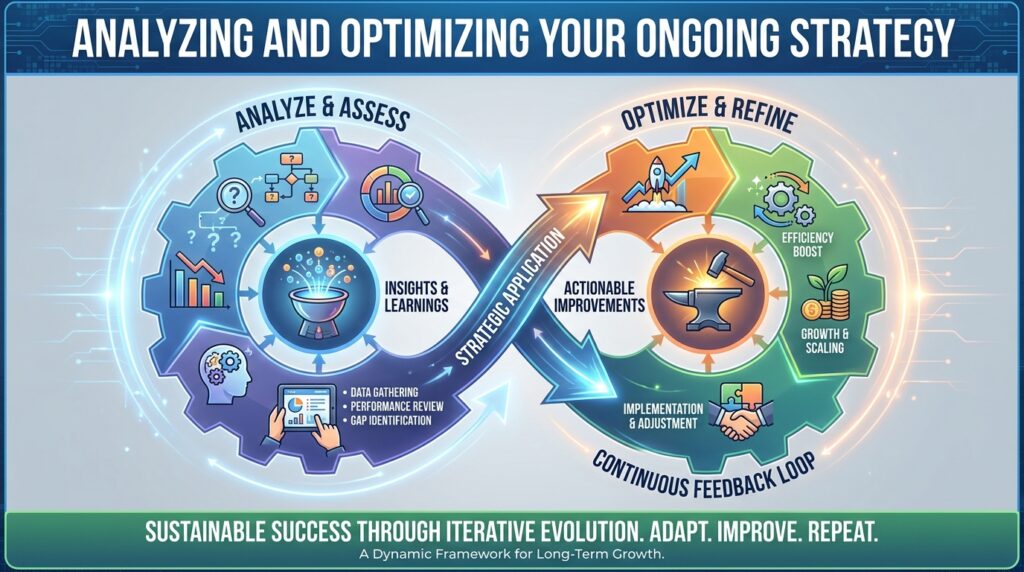
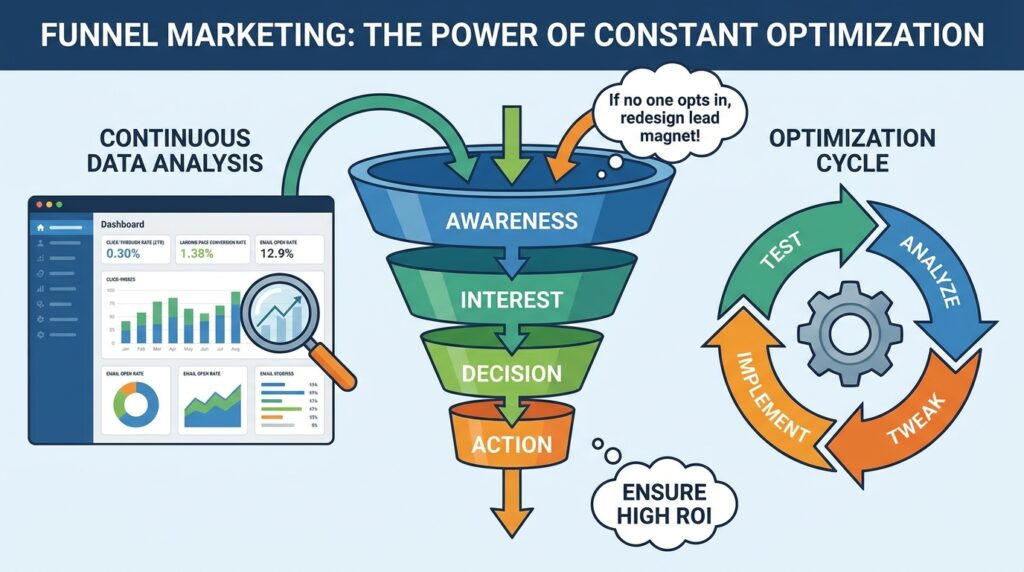
The work does not stop once your new system is live. A true digital marketer knows that constant optimization is the key to long-term profitability. You must diligently track metrics at every single stage. Look closely at your click-through rates, landing page conversion rates, and email open rates. If you ever have to comprehensively explain to a client what is funnel marketing with example, make sure you heavily emphasize the underlying importance of continuous data analysis. If many people land on your page but no one opts in, your lead magnet might desperately need a redesign. Continual testing and tweaking ensure that your return on investment remains high.
Conclusion: Mastering the Customer Journey
The work does not stop once your new system is live. A true digital marketer knows that constant optimization is the key to long-term profitability. You must diligently track metrics at every single stage. Look closely at your click-through rates, landing page conversion rates, and email open rates. If you ever have to comprehensively explain to a client what is funnel marketing with example, make sure you heavily emphasize the underlying importance of continuous data analysis. If many people land on your page but no one opts in, your lead magnet might desperately need a redesign. Continual testing and tweaking ensure that your return on investment remains high.