
Table of Contents
Digital marketing vs Traditional marketing: Which Strategy Fits Your Business?
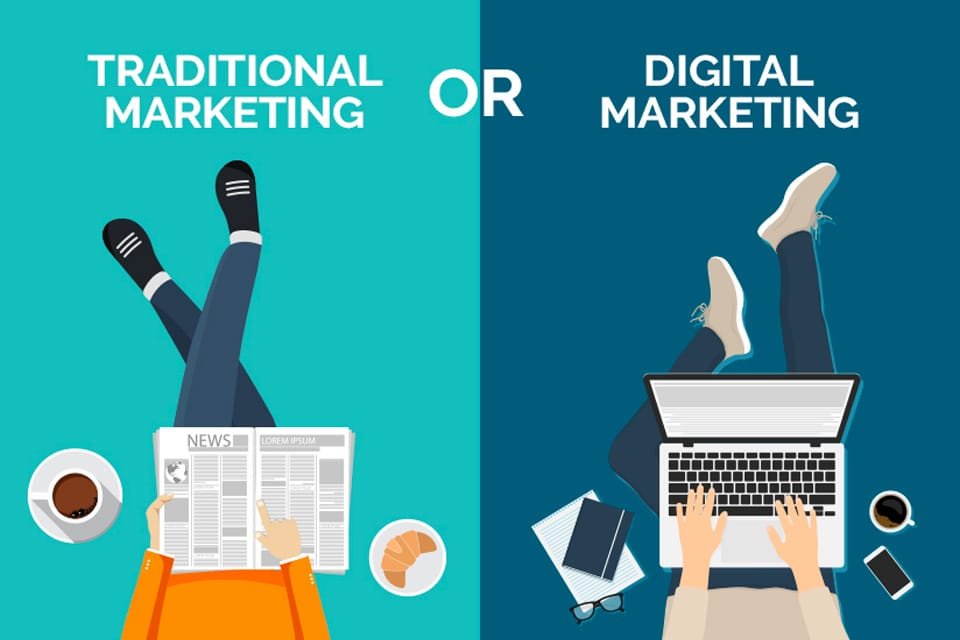
Marketing has changed dramatically in the digital age, but traditional advertising still has a place in the business world. Understanding Digital Marketing vs Traditional Marketing can help businesses choose channels that match their audience, budget, and goals. While digital campaigns use online platforms, traditional marketing relies on established channels such as television, newspapers, radio, billboards, and print media.
What is Digital Marketing?
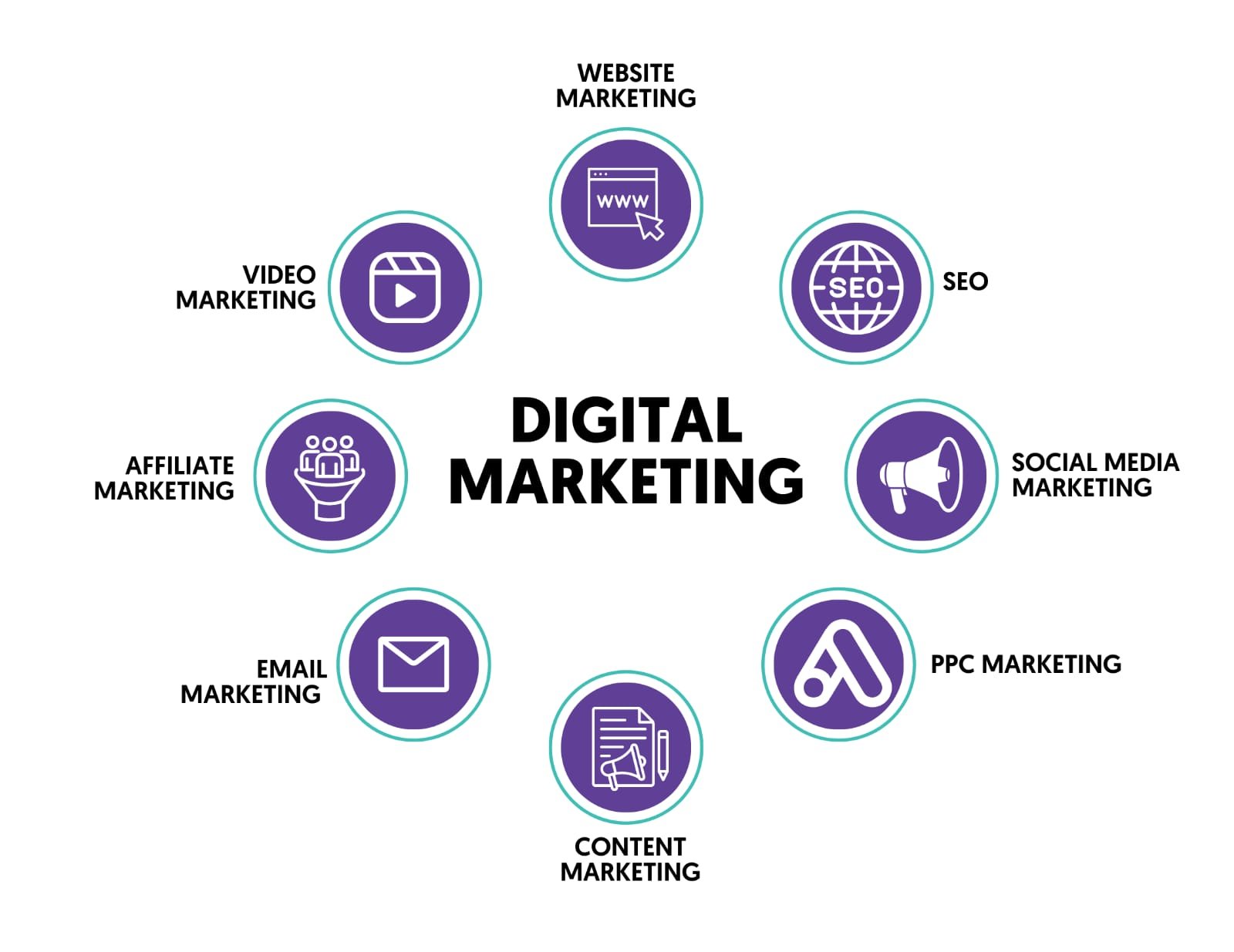
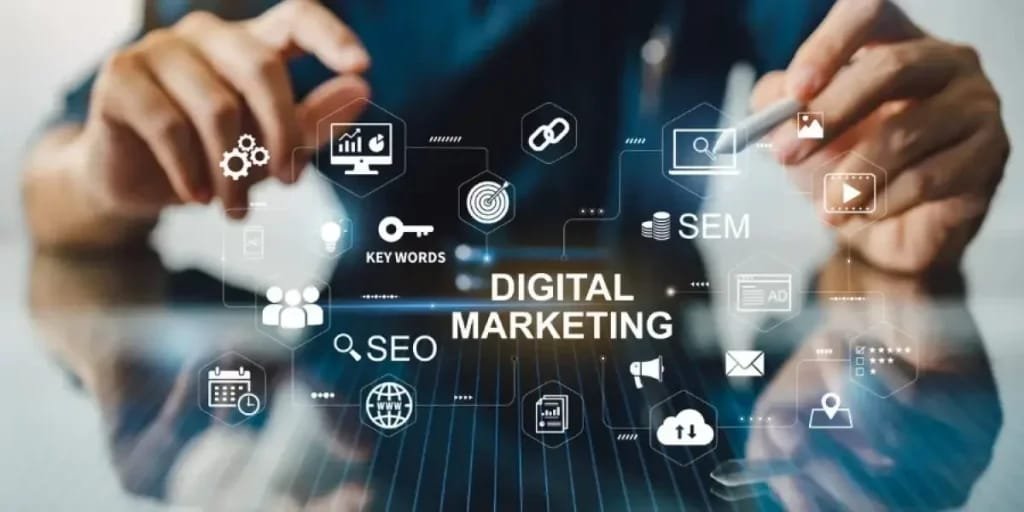
Digital marketing promotes products and services through internet-based channels. These include search engines, social media, email, websites, content marketing, and online advertising. Digital Marketing vs Traditional Marketing becomes especially important when a business wants measurable results and direct interaction with customers.
One major advantage of digital marketing is targeting. Businesses can create campaigns for specific audiences based on factors such as interests, location, online behavior, or demographics. Analytics tools can also show impressions, clicks, conversions, and other performance indicators.
What is Traditional Marketing?
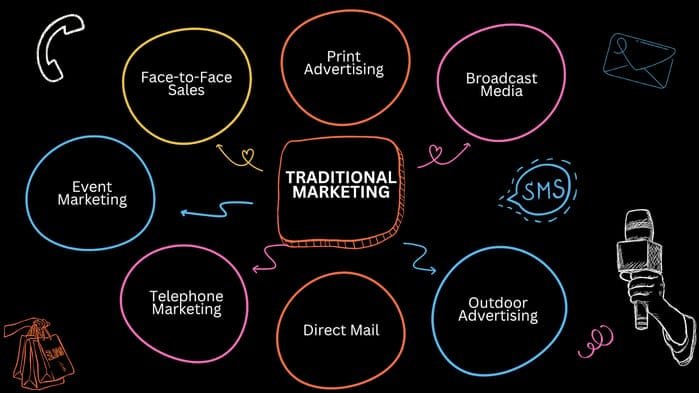
Traditional marketing uses offline communication channels to reach potential customers. Television commercials, radio advertisements, newspapers, magazines, brochures, direct mail, and outdoor advertising are common examples.
In the Digital Marketing vs Traditional Marketing discussion, traditional marketing stands out for its physical presence and broad offline reach. A billboard or newspaper advertisement can create visibility in a specific geographic area, while television and radio can reach large audiences.
Digital Marketing vs Traditional Marketing: Key Differences
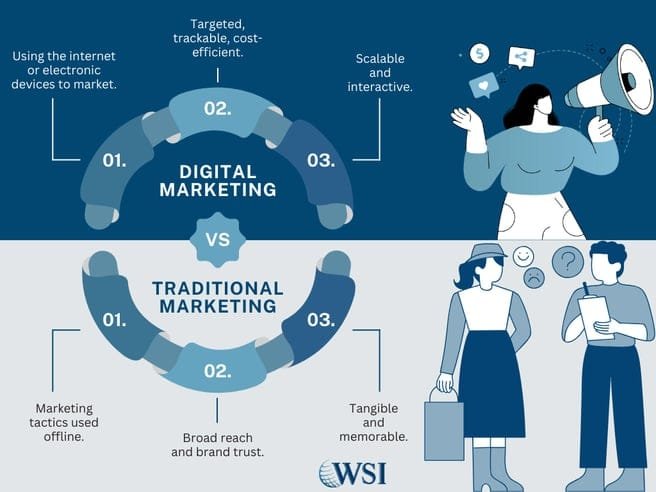
- The biggest difference between Digital Marketing vs Traditional Marketing is the way businesses communicate with their audiences. Digital channels allow two-way interaction, while traditional advertising is generally more one-directional.
- Another difference is Digital campaigns can provide detailed data about audience engagement and conversions. Traditional campaigns can also be measured, but tracking individual responses may be more difficult depending on the medium.
- Cost is another Digital marketing can allow businesses to start with relatively small budgets and adjust campaigns based on performance. Traditional advertising can involve higher upfront costs, particularly for television, print, and outdoor placements.
- Reach and targeting also differ. Digital platforms can reach audiences beyond geographical boundaries and offer detailed targeting Traditional marketing can be particularly useful when a business wants strong local or mass-market visibility.
Beneffits of Digital Marketing
Digital Marketing vs Traditional Marketing often highlights the flexibility of online campaigns. Businesses can quickly change advertisements, test different messages, and monitor performance. Social media also gives brands opportunities to communicate directly with customers.
Search engine optimization can help businesses attract people who are actively looking for relevant information, products, or services. Email marketing can support customer relationships, while content marketing can build authority and trust over time.
Beneffits of Traditional Marketing
Traditional marketing remains useful because not every customer discovers brands online. Print materials, radio, television, and outdoor advertising can help businesses build recognition and reach audiences in everyday environments.
For local businesses, traditional advertising can create visibility within a community. Physical materials can also provide a memorable brand experience when designed creatively.
Which One Should You Choose?
The Digital Marketing vs Traditional Marketing decision should depend on your audience, objectives, budget, and industry. A young online audience may respond strongly to social media and search campaigns, while a local business may benefit from a combination of digital promotion and offline visibility.
Instead of treating Digital Marketing vs Traditional Marketing as an either-or choice, businesses can combine both approaches. For example, a company could use social media to promote a local event while using posters or flyers to attract nearby customers.
The Future of Marketing
The Digital Marketing vs Traditional Marketing landscape is becoming increasingly integrated. Modern businesses often combine online data and offline experiences to create a consistent customer journey.
The most effective strategy is not simply choosing the newest channel. It is understanding where your audience spends time, creating valuable messages, measuring results, and continuously improving your approach.
Final Thoughts
Digital Marketing vs Traditional Marketing represents two different approaches to reaching customers, and both can contribute to a strong marketing strategy. Digital channels offer targeting, flexibility, and detailed measurement, while traditional channels can provide physical visibility, broad reach, and local recognition.
By understanding the strengths of each approach, businesses can create a balanced marketing plan that connects with customers and supports long-term growth.
Ultimately, Digital Marketing vs Traditional Marketing is less about choosing one side and more about selecting the right combination of channels for a specific audience and marketing objective.